
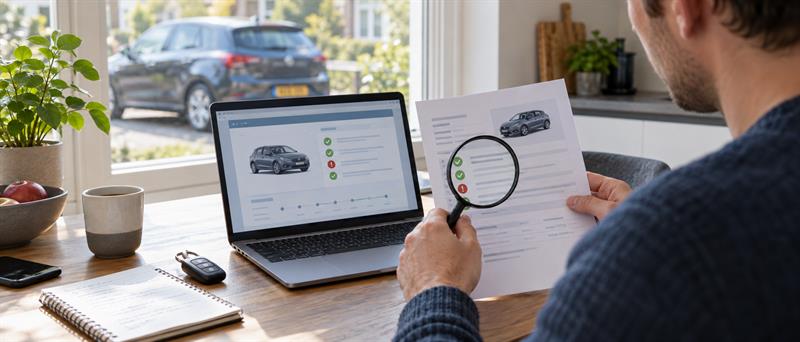
A Dutch licence plate can reveal a surprising amount about a used car. The RDW data helps you verify identity, registration status, mileage, APK, recalls, and technical specifications. It is an essential first filter, but it is not a mechanical inspection or a complete accident-history report.
Start with the Right RDW Check
The free public RDW registration check (kentekencheck) lets anyone enter a Dutch registration number and view non-personal vehicle information. It does not reveal the registered owner's name or address.
The more detailed RDW vehicle report (voertuigrapport) is requested by the registered owner or holder. Ask the seller to provide a recent copy and compare it with the public check, the registration card, the dashboard, and the physical car. A screenshot chosen by the seller is less useful than the complete report.
Confirm the Vehicle's Identity First
The registration number, make, model, colour, VIN, fuel type, and registration documents should all describe the same car. A plausible online report does not protect you if the physical vehicle is using cloned plates or altered identity markings.
1. Registration and Transfer Status
Look for the field showing whether registration transfer is possible. A “no” means the car cannot currently be put in your name, for example because of a registration restriction. Do not pay while assuming that the problem will be fixed later.
Also check the theft indication. If the RDW result says the vehicle is stolen, do not buy it and contact the police. For a private purchase, meet at the seller's home, compare their identity with the documents, and complete the transfer together.
2. First Admission and First Registration in NL
Date of first admission generally indicates when the vehicle first entered service anywhere. Date of first registration in the Netherlands indicates when it entered the Dutch register. A large gap usually means the vehicle was imported as a used car.
An import is not automatically a bad purchase. It does mean that the Dutch database may cover only part of the vehicle's life. Ask for foreign registration records, invoices, inspection documents, and digital service history, then verify them independently where possible.
3. Mileage: Logical, Illogical, or No Opinion
The RDW mileage judgement is often translated as:
- Logical (logisch): the registered readings used for the judgement rise over time.
- Illogical (onlogisch): at least one reading is lower than an earlier reading. That can indicate rollback, although an input error or replaced instrument cluster may also require investigation.
- No opinion (geen oordeel): the RDW does not have enough suitable information to reach a conclusion. This is common with many imported vehicles and is not the same as confirmation that the mileage is correct.
Compare the current dashboard reading with the report, service invoices, APK documents, maintenance-system entries, and the wear visible on the steering wheel, pedals, seat, and controls. Ask the seller to explain every gap or correction.
4. APK Status and Inspection History
The report shows when the current APK (Dutch periodic technical inspection) expires. An expired APK is a legal and practical problem; an unusually short remaining period should be included in your cost calculation.
Read available rejection, repair, and advisory points rather than looking only at the pass date. Repeated comments about tyres, corrosion, brakes, emissions, or suspension can reveal upcoming expenses. A fresh APK means the car met minimum roadworthiness and environmental requirements at the inspection; it does not assess reliability, service quality, market value, or every developing defect.
5. Recalls
The RDW check can show registered safety recalls and whether they remain open. Ask a brand dealer to verify the status using the VIN, especially when the RDW entry is unclear. Recall repairs are generally arranged through the manufacturer's authorised network.
6. Technical Data That Affects Your Budget
Use the listed fuel type, weight, CO₂ emissions, power, and environmental classification to check whether the advertisement is accurate and estimate running costs. Vehicle weight and fuel type affect MRB; emissions and age can influence environmental-zone access. Check approved towing weights if you plan to use a trailer or caravan.
Tyre sizes, seating capacity, body type, and registered modifications should also make sense for the vehicle in front of you. Undeclared changes can create inspection, insurance, or resale problems.
What the RDW Data Does Not Prove
- That the engine, gearbox, hybrid battery, or electronics are healthy.
- That the car has never been in an accident or repaired badly.
- That every foreign mileage reading or service was recorded.
- That the seller disclosed every defect.
- That a valid APK equals a comprehensive pre-purchase inspection.
- That the asking price is fair.
RDW Red Flags Worth Pausing For
- The car cannot be transferred or is shown as stolen.
- The physical VIN or registration documents do not match the online data.
- An illogical mileage judgement has no documented explanation.
- An imported car has little evidence from before Dutch registration.
- Repeated APK advisories suggest deferred maintenance.
- The seller refuses to provide the owner-only vehicle report or allow an inspection.
Official RDW Tools
- RDW public registration check (Dutch)
- RDW: explanation of the vehicle report (Dutch)
- RDW: tips for buying a vehicle
A Clean Report Is the Start, Not the Finish
DealerCenter combines document and history checks with an independent physical inspection, so you can judge the complete car rather than one database result. Book a free consultation today.


